User login

  • Sign in with Twitter
Connect
Sign in using Facebook
Aug 1, 2011

Breath for the Bones: Imagination and Muse

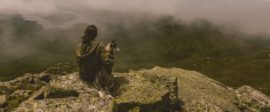
When I was a girl, my brothers and sister and I went for long forays into the woods—often staying out until the last golden rays of sunlight were long spent. We stomped through generations of leaves and vaulted over ravines with walking sticks. We tested our balance on bridges made from fallen trees and made swings out of thick grape vines. It was always an adventure and through these expeditions we were transformed into celebrated explorers, tasked with chartering an unknown country. These journeys informed our play at other times and we developed our own language—a new way of speaking that incorporated our discoveries—a new way of thinking that only we understood.

I have found that as I allow the created universe and the ingrained Scripture to illuminate me, what I deeply believe pushes up through the fabric of words, often in the most surprising and unplanned way…again and again the result suggests how the partnerships of art and spirituality probes the meanings that lie beneath the surface of all phenomena, waiting to be recognized and acknowledged.

And while these exploits were not soon forgotten, there was one better. Sometimes my mother came along. The forest jaunts were less raucous with mother along, but none less adventurous. For she taught us the fine art of listening—of how to creep quietly through the woods and surprise (and be surprised by!) nature. These times with mom were the times we would see the deer bedded down in the fern, the raccoon washing busy paws in a rushing creek, or the sly fox peering at us from the top of a brushy hill.

Fostering such a sense of watchfulness is one way to tune our hearts to the movements of the Holy Spirit—the Christian artist’s muse and baptizer of the imagination, according to Luci Shaw in Breath for the Bones: Art, Imagination, and Spirit: Reflections on Creativity and Faith.

Jesus reminded us of the importance of having eyes to see and ears to hear (Mark 4:9). His general revelation—the created universe around us with its built-in reflections of his character—is there for our observation. If we listen, we can hear “the heavens telling God’s glory and the firmament proclaiming it—day unto day pouring forth speech and night unto night declaring knowledge.” If we see, with both our outer and our inner eyes, we will affirm what the apostle Paul claimed in the first chapter of Romans: “Ever since the creation of the world his eternal power and divine nature, invisible though they are, have been understood and seen in the things he has made”  (v.20 NRSV)…

When we nurture our imagination, Luci says, we lay fertile ground for our faith to expands also. With imagination, the impossible becomes possible. The unseen becomes real. With imagination we are able to see the numinous in the ordinary.

…If we are to interpret and communicate life experience correctly, it is vital that we cultivate an active imagination in ourselves and our students that sees through, beyond, the flat window glass of dailiness, with its dust and fingerprints and uneven reflections, to the three-dimensional landscape on the outside, with its movement and light and shadow, its color and contour and texture, its nearness and distance, its changes of weather and season. We must see through surface experience and phenomena to their true reality and significance.

But how? How do we see beyond the flat window glass and into what eternity holds? Spiritual disciplines are helpful, says Luci, but the key is to always be watching—waiting for the Spirit to speak.

…I wait in silence by the sea or in the woods or in the silence of 2:00 a.m. when I cannot sleep, or more likely, in the press of a desk overburdened with other people’s urgencies, for a poem to call me, claim me, write me, much as I wait, in prayer, for the spirit to speak, to respond, to direct or correct me. I cannot turn on the writing art or transcendence like a faucet. My job is to wait and see—literally to wait for the Spirit, with the Spirit, and to see.

In this waiting time I must be sure that my antennae are out, combing the air, ready to pull in the messages. Receptivity, yes. Waiting, yes. Awareness, yes. Active readiness, yes. For passivity has no place in the life of art or of Christian spirituality. Art and belief are not conveniences, nor do they call to us at convenient times…

I remember my time in the forest and I know, as William Cullen Bryant says in his poem Midsummer: A power is in the earth and on the air. I wait. I watch. And I let the God-thoughts fill me with story. Feeding my imagination primes my heart to hear the voice of the Spirit.

Is there any greater Muse?

Join us next week as we discuss Chapter seven, Beginning with Journal Writing and Chapter eight, Learning to Risk. If you'd like to join the conversation today, leave us a comment or link up below with more thoughts at your blog:

Image by Caro Spark.Used with permission. Sourced via Flickr. Post by Laura Boggess.

We recommend logging in before posting comments

Reader Comments

Stay Connected

Subscribe for free to receive email encouragements about your work—once a week, once a day, or both!

(preview)
(preview)

Most Commented Posts

May 19, 2012

RECENT COMMENTS


Daily Reflection From Laity Lodge

Beauty as a Signpost to God, Part 2

The fact that we can perceive things as beautiful, I believe, points to the existence of a God who loves beauty and created us in his own image. I talked about this in yesterday's reflection. Yet... Read More +